Much like fellow Best Picture nominee American Hustle, The Wolf of Wall Street is a helluva fun ride that ultimately lacks the staying power that some of the other more serious Oscar contenders have. In other words, 12 Years a Slave The Wolf of Wall Street is not.
While much of the negative response to The Wolf of Wall Street has centered around the perception that the film celebrates greed, it seems like much of the point of the film was lost on those people. Martin Scorcese masterfully captures the grotesque excess by indulging in it. A lesser director would have maintained a measured detachment from the greed, using the distance to preach--I'm looking at you Steven Spielberg--against the actions of the characters.
In The Wolf of Wall Street, Scorcese lets the audience get taken in by Jordan Belfort only to crank up the excess leading to a repulsion to contrast more meaningfully against that urge to like the charismatic lead. In the role of rich asshole, Leonardo DiCaprio once again kills it for Scorcese. While one could certainly wonder if Leo is actually having to stretch much to play a role like Belfort, the fact remains that he excels in this immorality tale.
That isn't to say DiCaprio is alone in his greatness. Predictably, Scorsese gets great turns from the supporting cast. Kyle Chandler and Matthew McConaughey are both fantastic is smaller roles, as Jordan's foil and mentor, respectively. In addition to being stunning, Australian Pan-Am and Neighbours alum Margot Robbie is wonderful as the other half in a very mercurial relationship. Rob Reiner, Jon Bernthal, Shea Whigham, Cristin Milioti, and Jean Dujardin round out the rest of the strong supporting cast; but it is Jonah Hill who gets the most screen time of the rest of the cast, and he absolutely earns his second Academy Award nomination for Best Supporting Actor with a blisteringly hilarious and debaucherous turn as Donnie Azoff, Jordan's right hand and enthusiastic co-conspirator.
Now one could levy claims that Scorcese and screenwriter Terence Winter--Boardwalk Empire in the house--don't punish Belfort enough, but do any of the Wall Street bilkers get any significant punishment? His life is in shambles after his self-destruction, but anyone hoping for Scorcese to do a morality tale is barking up the wrong tree.
The real issues with the film lie with the fact that despite its three-hour runtime--a runtime usually reserved for historical epics or dramas with grave import--The Wolf of Wall Street falls a bit on the forgettable side of things. It's a full-blown debaucherous ride, but somehow a three-hour Martin Scorcese film seems to lack the significance that the rest of his fare has in spades.
Showing posts with label Oscars. Show all posts
Saturday, March 1, 2014
Friday, February 28, 2014
Man on Film: Live Action Oscar Shorts
Since this is an atypical subject here, I'll just do a quick breakdown on each of the nominees.
Aquel No Era Yo (That Wasn't Me)
Far and away the worst of the nominees. Obvious.
Avant Que De Tout Perdre (Just before Losing Everything)
A little slow to get moving, but ultimately engaging. Ratchets up the tension well. Effective glimpse into a terrible episode of family drama.
Helium
It was a little schmaltzy, but I'll be damned if I didn't tear up. The zeppelin effects were a little weak (an understandable byproduct of a limited budget), but the performances of the three principle cast members, especially Casper Crump, were very strong. A cute, emotionally involving story set against a depressing situation.
Pitääkö Mun Kaikki Hoitaa? (Do I Have to Take Care of Everything?)
Very Scandinavian. Very funny. Sure, it was lighter than the rest of these entrants, but it was definitely the most fun.
The Voorman Problem
Martin Freeman and Tom Hollander get to chew on some great dialogue. Clever. Wickedly funny. It's available here
. In my mind, this one is the class of the category.
Aquel No Era Yo (That Wasn't Me)
Far and away the worst of the nominees. Obvious.
Avant Que De Tout Perdre (Just before Losing Everything)
A little slow to get moving, but ultimately engaging. Ratchets up the tension well. Effective glimpse into a terrible episode of family drama.
Helium
It was a little schmaltzy, but I'll be damned if I didn't tear up. The zeppelin effects were a little weak (an understandable byproduct of a limited budget), but the performances of the three principle cast members, especially Casper Crump, were very strong. A cute, emotionally involving story set against a depressing situation.
Pitääkö Mun Kaikki Hoitaa? (Do I Have to Take Care of Everything?)
Very Scandinavian. Very funny. Sure, it was lighter than the rest of these entrants, but it was definitely the most fun.
The Voorman Problem
Martin Freeman and Tom Hollander get to chew on some great dialogue. Clever. Wickedly funny. It's available here
Wednesday, February 26, 2014
Man on Film: Nebraska
Alexander Payne's follow-up to The Descendants is another film about family, this time returning to his Midwestern roots. An interstate road movie about a senile-leaning father and his reluctant chauffeur son, Nebraska springs forth from the fertile ground of a son trying to do right by his father despite a strained relationship.
It is fantastic.
Perhaps my feelings on the film are too heavily informed by my roots, but Nebraska magnificently captured every nuance of small-town Midwestern life. The stoicism of the pre-Baby Boom male. The tried and true topics of conversation of the peoples of largely agrarian, shrinking small towns of the plains. The simple pleasures. The age old grudges. The general kindness and interest in personal minutiae. Bob Nelson's screenplay felt as though it could have been written directly from afternoons in my childhood. It was equal parts knowingly detached and lovingly attached, dancing brilliantly between the two, striking a wonderful balance.
And Alexander Payne pressed all the right buttons. The tone--from the performances to the black-and-white stock--is pitch perfect. Bob Odenkirk and the sublime June Squibb hit every note, but Will Forte and Bruce Dern play the parts of beleaguered but faithful son and father teetering on the edge of senility with perfection. The support, particularly the cast employed in Hawthorne, is also spot on, with the football watching scene being one of the highlights of the last year in cinema.
Seemingly every decision Payne makes works out wonderfully. The dynamic between Forte and Dern is particularly fruitful, but the casting of the relatively little-known character actress June Squibb really sets the movie apart. Nebraska is wildly funny but retains a poignancy and heart that endear it so much more than nearly every other film of the past year. On the heels of The Descendants, it was hard to imagine Alexander Payne making a film as outstanding as it, but in Nebraska he exceeds expectations.
Man on Film: American Hustle
Coming after The Fighter and Silver Linings Playbook in David O. Russell's body of work, it was hard to not have high expectations for American Hustle. As a result (and the subsequent innumerable accolades and nominations heaped upon it cannot help for those who have yet to see American Hustle), American Hustle was at least a little disappointing.
That isn't to say American Hustle wasn't good. It is just a victim of its high expectations.
In essence, American Hustle is an acting showcase. From the principal cast to supporting cast members like Robert DeNiro, Elisabeth Rohm, Michael Pena, Louis C.K., and the Boardwalk Empire cameo crew (Jack Huston and the inimitable Shea Whigham), this was an opportunity for actors to shine, regardless of their line count. And as Russell's films virtually guarantee, shine they do.
And while the supporting cast is rock solid, the principle cast is outstanding. Jeremy Renner gets to shine as a faithful family man and politician who actually wants to provide for his constituents. Bradley Cooper turns in a wonderfully complex role, imbuing Richie DiMaso with every bit of obsessiveness, self-pity, egotism, and volatility that it required. Amy Adams and Jennifer Lawrence are both fantastic and get to make themselves comfortable in these wildly unpredictable and wholly colorful roles. And Christian Bale? Holy shit. Once again, Bale shows that he belongs in that very short list of actors who turn in must-watch performances every damn time. He is brilliant once again, and his brilliance goes far past his physical commitment to the role. Bale disappears into the role of Irving Rosenfeld. He was given a role wrought with pathos, a duality of supreme confidence and insecurity that is thrilling to behold.
After all of this discussion of the stellar acting, it would be a disservice to those working behind the scenes to fail to talk about the production design, wardrobe, and art direction. The painstaking attention to detail that went into realizing the world of this film was obvious in every frame of the film. The uniformity in style and full realization of late-'70s New York/New Jersey is special.
As usual, David O. Russell has crafted a well-directed film. It is hard to argue with the performances or the mise-en-scene. The narrative, however, was just a little lacking in the oomph that his recent films have had. The story in American Hustle was fun but ultimately insubstantial. The richness of characters goes a long way towards helping to remedy this shortcoming, but American Hustle is not a movie that stays with you for more than an hour or so after you walk out of the theater. With a David O. Russell film, this is sort of something that I had come to expect.
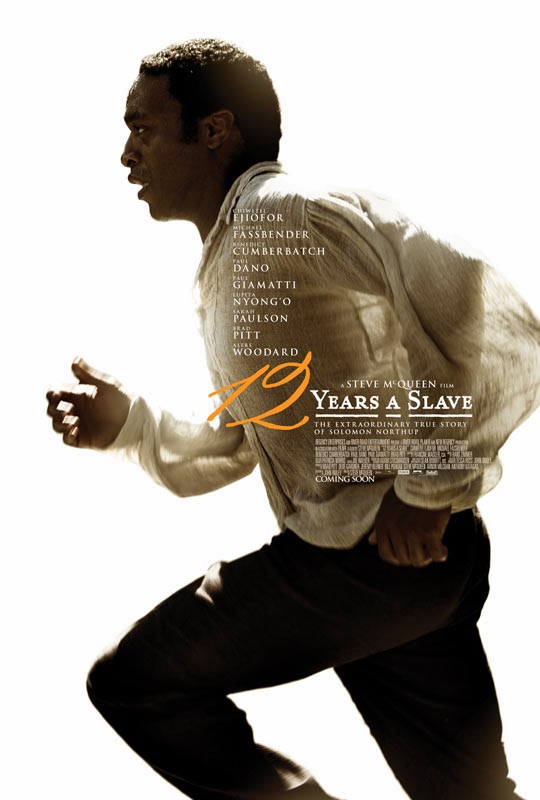
Man on Film: 12 Years A Slave
Once again, we republish this as the Oscars draw nearer.
Before you read any further, see 12 Years A Slave. Drop what you're doing. Cancel your plans. Oh, you're supposed to fly home for Christmas, but haven't seen it? Reschedule your flight.
12 Years A Slave is fucking phenomenal.
This is the time of year that theaters are flooded with Oscar trash. The important film: the stodgy period piece, usually adapted from a classic novel; the adaptation of a heavy-handed, award-winning contemporary novel [preferably the Pulitzer] usually neatly packaged with some larger message about sexual repression or religion, with a careful eye toward production design; or the biopic of someone who overcame some personal struggle to achieve something or lead a people. If the film can prey on liberal white guilt, all the better.
12 Years A Slave is definitely a biopic about someone overcoming a struggle, and any white person who doesn't feel horrible about what happened to Solomon Northup is at least 99% likely to be a horrible racist, but holy shit is it amazing. It is brutal--visually and emotionally. The situation Solomon finds himself in is so awful that it is impossible not to feel his pain. And there is a lot of pain. He is stripped of his dignity, his hope, and his humanity and is powerless to do anything about it.
What makes the film is director Steve McQueen's unwavering dedication to his vision. There are so many bold choices, so many shots that linger for far longer than one would expect, so many that drive key turning points. In a less confident hand, these scenes would feel heavy handed. In 12 Years A Slave, the decisions take your feet out from under you.
Of course, all would be for naught were it not for sterling performances, first and foremost being that of Chiwetel Ejiofor. There are other strong performances--Benedict Cumberbatch, Paul Dano, and Brad Pitt are all good, Michael Fassbender and Lupita Nyong'o particularly are great--but Ejoifor's is the performance of a lifetime. Ejiofor is always a captivating performer, but McQueen uses Ejiofor's face as a canvas, his eyes as a channel to the film's emotive center. There is no better example of this than the scene in which they bury Uncle Abram (pretty sure that's the character). While the slaves sing "Roll Jordan Roll" around the fresh grave, McQueen holds a tight shot on Ejiofor's face, as at first he stands there, numb, any hope that this cruel twist of fate will be miraculously reversed draining from his face, the last shred of belief that he was a free man fading. Then he starts in with his brethren. A slave, but hope of a different sort taking root within him. The scene tears at you, and McQueen's choice to hold on Ejiofor's face and let all these emotions play out over the almost uncomfortably long shot proves to be inspired.
In short, 12 Years A Slave is brilliant, bold, soul-crushing, brutal, and vital. It must be seen.
Tuesday, February 25, 2014
Man on Film: Blue Jasmine
Here is another old entry with Oscar implications.
To say I've been very bad at keeping up with these entries would be a vast understatement. To put it into perspective, I am twenty-three--yes, two-three--entries behind, most of them being Man on Film entries. I hope to catch up on them in the coming weeks, so while there may not seem to be a rhyme or reason to why I choose what I choose, I can tell you right now that I'm choosing Blue Jasmine because it might just be the best film I've seen this year. And yes, I did see Gravity.
To say Blue Jasmine is good Woody Allen would be a gross understatement. Even when he's been great over the past 20 years or so, it hasn't always felt that Allen was working outside of himself very much. Midnight in Paris and Sweet and Lowdown were great films, but they definitely shared quite a few commonalities with his pre-existing body of work. For the first time in decades, Woody Allen has made a film that doesn't feel like a Woody Allen film.
Yes, the dialogue is still strong and snappy, but this isn't the signature--or in worse cases (I'm looking at you, To Rome with Love), self-parodying--dialogue to which we have become accustomed. The narrative is psychologically complex, structurally nimble, and most importantly breaks from the handful of boilerplate stories Allen routinely falls back upon. Quite frankly, Blue Jasmine is far from what we expect to see from a Woody Allen film, and it's shockingly refreshing.
Much has been made of the performances in the film, and that hubbub is largely justified. Cate Blanchett and Sally Hawkins are particularly great with Blanchett's performance being enough to carry the film regardless of what the other actors did, but with the rest of the cast being superlative, Blue Jasmine is simply stunning. Even in light of the recent big hit Midnight in Paris, Blue Jasmine wastes little time distinguishing itself from the rest of Allen's curriculum vitae as a standout achievement, and by the time it gets to its conclusion you're shocked that he was even its auteur.
That's a good thing.
Man on Film: Gravity
With the Oscars coming up this weekend, I'll be putting up the Man on Film entries (both old and new) for this year's big nominees. Here goes.
If there is one thing that Alfonso Cuarón is inarguably capable of doing, it is making a film that must be seen on the big screen. In the case of Gravity, that means IMAX and 3D because no one maximizes the medium of film like Cuarón does. Unlike any film that's come before it, Gravity manages to use the scope and technology at today's filmmaker's disposal to its fullest potential. While I would still posit--even after having seen Gravity--that 3D simply doesn't add enough to the experience, Gravity is definitely worth the price of admission if only for the spectacle of the IMAX presentation.
Yes, Gravity is worth every penny paid to see it. The film is an event that warrants seeing it on the big screen. Unfortunately, the simplicity of the narrative finds a way to wither in the majesty of the presentation. That isn't to say that the film isn't emotionally affective. It is. Over the course of the movie, it is nearly impossible not to feel for Dr. Ryan Stone (Sandra Bullock) and Matt Kowalsky (George Clooney) as they are left adrift in space without contact to the outside world. Cuarón masterfully builds the characters and the suspense to keep you engaged. Both of the film's stars are everything you would want them to be.
It is just strange that the film's story is so intimate when cast against the magnitude of the film itself. It's a brilliantly conceived vision; it's just that the contrast in scopes of narrative and mise-en-scène is so drastic as to almost be distracting. Obviously, this was Cuarón's intent, and really, who am I to question a man as brilliant as he? It just seems that this film was all about the spectacle, emotional as it may have been, while failing to stay with you once you left the theater.
Subscribe to:
Posts (Atom)