I had wanted to check out Buried while it was in the theaters but never got around to seeing it. Obviously, this urge was driven by my Ryan Reynolds fandom, which many would classify as irrational or inexplicable.
Needless to say, when faced with a Sunday in which I awoke at 7:00 AM with nothing on the docket for my only day off of the week, I queued it up like John de Lancie.
I can say without reservations that this is arguably Reynolds's finest hour, at least until the Deadpool movie happens. Sure, he's his funny self in Waiting..., Van Wilder, and Two Guys, A Girl and a Pizza Place, an amiable father in the underrated Definitely, Maybe*, and an apt sleazeball in Adventureland, but he had not been previously required to take on a role like that of Paul Conroy in Buried.
*Perhaps it's no coincidence that both the movie and the Oasis album of the same name are underrated. The title doesn't help much, as it seems unable to assess itself, but the movie (which I've written about here) and the album are both damned entertaining. I'd certainly say that the Oasis album is superior, but I could throw either on and be happy.
Coming to in a slipshod wooden coffin buried in the Iraqi desert, Conroy is stripped of everything but a Blackberry, a Zippo, his flask, and some lights. What follows upon his regaining consciousness is an exercise in claustrophobia that does not relent and would surely have induced unbearable unease had I actually seen it in the theater.
Relatively unknown director Rodrigo Cortes never lets his camera leave the box. What unfolds is a suspenseful one-man show that drives anxiety and fear to great heights. It may not reach the apex that 127 Hours does, but it succeeds in surpassing the likes of Phone Booth, whose sense of claustrophobia simply isn't as fully realized.
Adapting Moneyball into a film was a loaded proposition. Amongst certain circles, this book was (and to an extent still is) a bit controversial. As someone who stands somewhere vaguely nearby these circles, this was bound to be a somewhat divisive film. It was divisive for me.
On a fundamental level, the film fails to drive home the misunderstood central point of the book. The movie sort of touches on it, but what the book was really about the A's success as a result of exploiting market inefficiencies. Jonah Hill's Peter Brand character (the Paul DePodesta stand-in) hints at the larger issue when he is talking with Billy Beane (Brad Pitt) in their conversation in the parking ramp but doesn't go much further than to say that Major League Front Offices were in the Stone Ages.
Unfortunately, Moneyball the film ends up being an oversimplification of the scouts versus stats debate with an extremely one-sided take on the issue. The scouts are painted as stodgy old men unable to stomach a challenging of the status quo or to adjust to any sort of change.
From a baseball nerd's standpoint, this was a bit of a disappointment.
Having said that, the movie itself was pretty good. While some of the deviations from the book may bother those who read it, artistic license is obviously employed for the sake of streamlining the story and dramatic effect. The changes are understandable, as elements such as the draft had no bearing on the season itself. Working with a Steven Zaillian draft, Aaron Sorkin's presumed polish on the dialogue definitely shows, and Moneyball is rife with humor. The film looks pretty good, although the occasional departure from realistic shooting during some of the baseball sequences was sort of irksome. Not surprisingly, Brad Pitt carries the film, and Jonah Hill ably pulls off being his complement.
The seemingly universal acclaim seems a little surprising but is mostly from the general public with the baseball community seeing the film as much more of a mixed bag. Personally, the film was solid but not spectacular, and it was a bit difficult to separate the book from the filmic interpretation of the book.
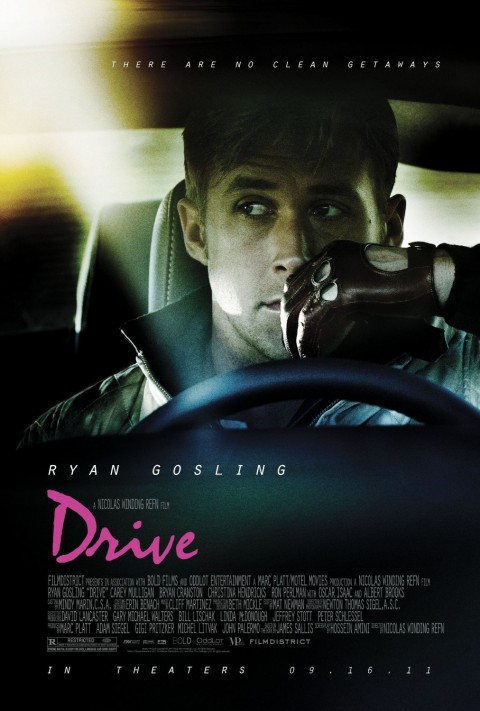
Really, those three words could aptly sum up my reaction upon walking out of the theater after seeing Drive. Remember a little while back when I credited TSLF with pointing out that you kind of trust Ryan Gosling at this point. Drive sets this in stone.
In Drive, Nicolas Winding Refn has crafted an action film that sits down and makes itself at home in the ordinary. Much of the first half of Drive does little more than follow Gosling's nameless Driver in his day-to-day life. He drives around Los Angeles, does a stunt on the set of a film, goes grocery shopping, and goes to work at the auto shop.
While Refn revels in the mundane, he sets these scenes against the sonic backdrop of Cliff Martinez's ethereal score and a smattering of synthed up electronic pop gems hearkening back to the 1980s. When combined with Driver's oft-out-of-time attire (namely his killer scorpion jacket) and the neon titles, the film manages to feel as if it is happening in a time unbound to a single era--both now and in the 80s--almost as if it were a dream.
It is in this dream- or trance-like state that the Driver seems to operate within. This is evident early on. After getting his wheel man spiel via voice-over, we see Gosling waiting curbside for two men pulling off a heist seen in part here:
Throughout the film, Gosling affects a calm that nearly spills over into aloofness. He is the modern Spartan. For the most part, he speaks in simple sentences and only when addressed. The one time he does speak at length, his wheel man spiel, comes via voice-over, so it is almost as if his only lengthy lines of dialogue come from the ether.
It is this tone that is struck in the majority of the opening half of the film that makes the violence that ensues in the second half of the film so jarring. The calm that pervades the film early on is broken suddenly and shockingly, and the random intermittence at which it explodes keeps the audience on edge. This is what sets Drive apart. Nicolas Winding Refn sets a tone to make the violence resonate. It can come at any time, and it goes just as fast as it came. And the driving scenes are unique in that Refn keeps the focus tight on the Driver, which causes a much more personal reaction to the sequences.
Now, the way that I've talked about the film makes it seem like acts of violence just break into an otherwise dreamlike movie about the mundane. There is a healthy dose of comedy and lightheartedness mixed in, just enough to sprinkle in a little levity.
As for the acting, Bryan Cranston, Ron Perlman, and Christina Hendricks are all perfectly fine. After what seems like at least a decade since Albert Brooks has had a role to do anything with, he gets his Robert Forster in Jackie Brown opportunity and relishes it with elan. As for Carey Mulligan, she plays an endearing quasi-single mother injecting a gentle humanity into the core of the film.
And then there's the star. As always, Ryan Gosling brings it. His performance is reminiscent of Brando or McQueen. He says next to nothing yet the camera is almost always focused on him. His scenes with Irene (Mulligan) and her son, Benicio (Kaden Leos), are great and he gets to show a slightly goofy side. When it comes time for him to unleash hell, he is up for the challenge.
All in all, what Refnhas crafted is a stellar action piece that vacillates between a near-dreamlike state and storms of action and violence with unpredictability. It is also one of the best films of the year.
I like Nick Cave. A lot. Enough to travel from Austin to Portland to see him (with the Bad Seeds) in concert. The Death of Bunny Munro was a tough read.
Perhaps it was the fact that I was reading this simultaneously with Bukowski's Post Office, but reading something that made me feel like an unforgivable bastard just for being equipped with male genitalia is not the most appealing proposition. The titular character is loathsome. He is controlled by his id, chasing tail recklessly (and often reprehensibly) across the pages of the novel. Surviving his wife (whose suicide can largely be pinned on his wanton skirt-chasing ways), he brings his son along on the road with him while he makes cosmetics sales calls. He unravels, but the voyage is simply tiresome.
Upon finishing the book, the only feeling left is relief at not having to read any further, which is sad because Cave has such a penchant for writing compelling music leaving you wanting more.
I guess this is as good a place to start as any in my massive backlog of entries to write. Some may be less long than others, but given the monumental task at hand that has to be expected, if not excused.
Generally speaking, I like the body-switch comedy. Sure, that affection is driven mostly by an appreciation for camp, but the affection remains. After all, this is the genre that includes Like Father, Like Son, Vice Versa(that link right there is for the the two combined...), 18 Again, and Dream a Little Dream.
With its raunchiness front and center, The Change-Up should have sated my yearning. Adding Jason Bateman and Ryan Reynolds to the mix should have sealed the deal.
Unfortunately, their presence (if you somehow missed it, this guy is a fan of Ryan Reynolds) raises the stakes, and the script/direction doesn't ante up.
There are some funny bits. At this point, The Change-Up is an afterthought anyway. You are probably more likely to see it on TV or video. It isn't completely bereft of comedic value, making it worth queuing up on Netflix when it makes its way there.
As a bonus, Olivia Wilde is in the movie, and it has been scientifically proven that she's a stone-cold fox.
As we were trying to choose which movie to head out to over the weekend, our choices narrowed down to a few films. When Crazy, Stupid, Love. came up, TSLF made a comment that rings truer than any positive buzz could have:
It's weird, but I sort of trust Ryan Gosling's choices.
She is right. Half Nelson, Lars and the Real Girl, and Blue Valentine were all great. The decisions to sign on to Stay and All Good Things (neither of which I've seen, but both of which were poorly received) were clearly defensible, as he was working with the man coming off of Monster's Ball and Finding Neverland on the former and Capturing the Friedman's on the latter. For what it was, The Notebook is fairly good. And as far as what's coming up for Gosling, Drive and The Ides of March both look to be promising if judged by the trailers.
As for Crazy, Stupid, Love., it seemed as though everyone who saw it came out loving it. Given that and Gosling's trustworthiness, it seemed like Crazy, Stupid, Love. could very conceivably overcome its awkward/awful title and lackluster trailer and actually be a decent flick.
For the most part, it was.
Sure, it is a romantic comedy, generally the kiss of death for dudes. Its trailer doesn't do it any favors on that front either. Somehow this film doesn't feel like a rom-com. Maybe it's the emotional rawness at its center as its protagonist has been cuckolded. The destruction of a marriage is not often at the center of a rom-com. In a world that deals almost exclusively with two singles who aren't supposed to be together getting together, seeing a separated couple trying to piece together their lives after one's infidelity tears them both apart is refreshing in a world other than that of the tiresome adult-oriented family melodrama.
Honestly, the film is just entertaining. The potential liability, Julianne Moore, has been cast in the only sort of role that she can actually pull off: the woman whose marriage is falling apart. While one has to wonder what this says about her own marriage, she is not thrust into the authoritarian roles that she is so ill-suited for like in Next or Children of Men where her inability to match the tone of the film grates one's nerves for every second that she's on screen. Past her, Carell is typically likeable, Gosling owns the role of lothario, Emma Stone gets to play an adult, and Marissa Tomei gets a great cameo. The narrative is well-crafted.
If Crazy, Stupid, Love. has a fault (other than that goddamn name), it is that its climax is too schmaltzy. It probably could have done without the About a Boyending with a graduation speech supplanting the talent show performance, and the soul mate shit didn't work, but you can only punish a film so much for this. When a film is genuinely surprising for 110 minutes, an unsurprising eight minutes at the end don't necessarily sink the ship.
(After talking about how crappy the trailer was, you didn't think I was gonna put that up, did you?)
Before the film had even begun production, Horrible Bosses had a lot going for it. Conceptually, its three-headed protagonists' goal should have sated a cathartic yearning for the majority of the audience. The three stars, Jason Bateman, Charlie Day, and Jason Sudeikis, are all immensely likeable. Their foils, Kevin Spacey, Jennifer Aniston, and Colin Farrell, are easy to dislike. The only potential problem in the bunch, Aniston, was playing against type--the only way any of her filmic endeavors have ever proven successful.
Unfortunately, despite the fact that it had all these things going for it from Jump Street, Horrible Bosses didn't manage to distinguish itself as anything more than a pretty good R-rated romp. Whether it was the screenplay (co-written by John Francis Daley, who played Sam Weir on the beloved classic Freaks and Geeks) or the direction (Four Christmases and King of Kong: A Fistful of Quarters auteur Seth Gordon was at the helm here), something about the film fell short of what it could have been.
That isn't to say Horrible Bosses was bad. Again, it was pretty good. It's just with such a strong concept, a three-way Strangers on a Train scenario played out to comedic effect, one has to be a bit disappointed that the concept's potential isn't fully actualized*.
*Quite like the disappointment that set in upon having seen Bowfinger, another film in which the idea of the film is better than the film itself.
Where the fault lies, I cannot be sure. It does seem like the titular characters are not quite horrible enough. Yes, they're loathesome, but in rooting for their demise, the audience truly has to hate them. This can still be done comedically, but the laughs and build up of animus don't quite meet a level necessary to make this a great comedy.
The bottom line is that Horrible Bosses is a funny movie. It will be easy to watch again as it makes the rounds of the premium cable networks. The disappointment lies in its failure to meet expectations.
Hot off the heels of watching Mega Python Vs. Gatoroid, there was clearly an itch that needed scratching.
That scratching came via the 2008 documentary I Think We're Alone Now.
Really, a simple synopsis should sell each and every one of you readers as to why you should watch it.
This is the story of two obsessive Tiffany fans--one an intersexual 38-year-old and self-proclaimed "athletic machine," the other a 50-year-old male with Asperger's syndrome who at one point had been court-ordered to stay away from the 80s teen idol for three years.
Does that not speak for itself?
It takes a weird cat to be obsessed with Tiffany that late in the game. While these cats do not let you down, it also isn't a mean-spirited documentary poking fun at those unable to defend themselves.
Weird Tiffany factoid of the day: She was once stalked by Robert John Bardo, who eventually stalked and killed Rebecca Shaeffer (star of My Sister Sam), whose death served as inspiration for the film Moonlight Mile.
Obviously stalking is no laughing matter, and Jeff Turner has scared the shit out of Alyssa Milano upon setting his sights on her, but these two seem relatively harmless.
There's a ton of catching up that needs to be done here, so some of the coming posts might be half-assed.
This is one of the half-assed entries.
I've seen all of these movies. I do not really give a shit about any of them. They're OK for what they are I guess, but I have a hard time caring about the series.
I do feel bad for Daniel Radcliffe because it seems like he is on the fast-track to becoming the next Elijah Wood. Maybe this means he'll get his Wilfred someday. Maybe it will meanstunt casting on Law & Order: UK in ten years.
Oh, I'm supposed to talk about the movie here aren't I? Sorry. So it was all right I guess. People who have read the book recently seemed upset about the movie not doing the book justice. This couldn't matter any less to me.
What does matter to me is how ridiculous the "19 Years Later" sequence was. Ho. Ly. Shit. I guess this was bound to happen if they were dead-set on using the extremely young-looking actors to play themselves as almost-40-year-olds. If ever there were a case to be made for hiring other actors to play characters as adults rather than trying to age them through the magic of the cinema, this would be the closing argument. Fuck me these kids can't be made up to look like 40-year-olds.
The rest of the movie is fine, I suppose. Perhaps eight films worth of build-up isn't capitalized upon in the climactic face-off. There is certainly a sour taste left after that and the "19 years later" nonsense.



 .
.
 was a tough read.
 , but reading something that made me feel like an unforgivable bastard just for being equipped with male genitalia is not the most appealing proposition. The titular character is loathsome. He is controlled by his id, chasing tail recklessly (and often reprehensibly) across the pages of the novel. Surviving his wife (whose suicide can largely be pinned on his wanton skirt-chasing ways), he brings his son along on the road with him while he makes cosmetics sales calls. He unravels, but the voyage is simply tiresome.
 ,
, 
 , and
, and  ,
,  , and
, and  were all great. The decisions to sign on to Stay and All Good Things (neither of which I've seen, but both of which were poorly received) were clearly defensible, as he was working with the man coming off of Monster's Ball and Finding Neverland on the former and Capturing the Friedman's on the latter. For what it was, The Notebook is fairly good. And as far as what's coming up for Gosling, Drive and The Ides of March both look to be promising if judged by the trailers.
 or
or  where her inability to match the tone of the film grates one's nerves for every second that she's on screen. Past her, Carell is typically likeable, Gosling owns the role of lothario, Emma Stone gets to play an adult, and Marissa Tomei gets a great cameo. The narrative is well-crafted.
 ending with a graduation speech supplanting the talent show performance, and the soul mate shit didn't work, but you can only punish a film so much for this. When a film is genuinely surprising for 110 minutes, an unsurprising eight minutes at the end don't necessarily sink the ship.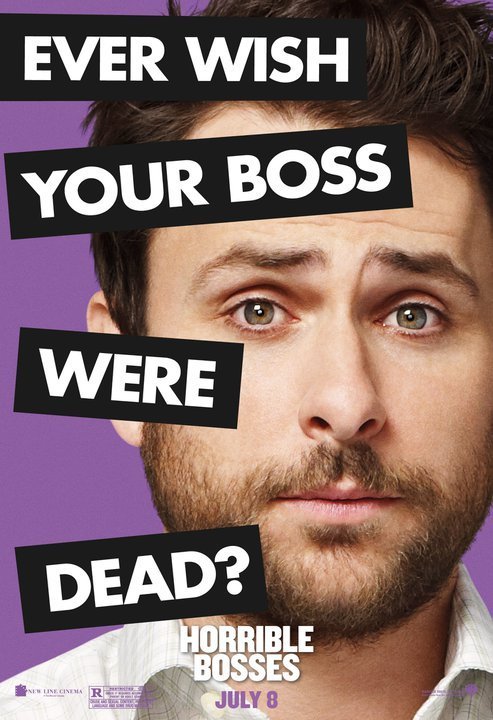

 , there was clearly an itch that needed scratching.
 .
.
