Over the past few years, I've been getting more and more into MMA. Not as something I actually do, but I have grown to really like the UFC.
Warrior was in my wheelhouse.
I don't need to expound too much on this one. Alcoholic father is good at exactly one thing, training his sons to fight. He cared much more about the angry fuck-up of a son than the son who stayed back when their mother left for her own good. There is fraternal strife and distance. Each of the brothers, played by Tom Hardy and Joel Edgerton, is hard-up for money. Impossibly the two surmount the insurmountable odds stacked against them to face each other in a winner-takes-all tournament. You get the point.
What is easy to overlook is how well the film stirs conflict within the heart of the audience. This is where Gavin O'Connor's film sets itself apart. When Brendan and Tommy face each other, you don't know which one you want to win because you actually care about both of them. Hot off his great turn in Animal Kingdom, Edgerton plays a character seemingly inspired at least in part by former teacher-cum-UFC Middleweight Champ Rich Franklin. With a primary role in The Thing and another high-profile film on the way in the form of Baz Luhrmann's adaptation of the F. Scott Fitzgerald masterpiece The Great Gatsby, it seems that Edgerton's career is about to take off like a rocket. This isn't unlike what has happened for Tom Hardy since his star-turn in Nicolas Winding Refn's Bronson put him on the map. The two are pretty evenly matched in Warrior, and the film works in large part because of them.
As a film, it may be somewhat lacking in originality on the screenplay side of the equation, but the fight choreography was tight, visceral, and most importantly intelligible. The cinematography, especially in Pittsburgh, had the gritty feel necessary to make you feel like this is where the Conlon boys could have come from. Throw in a couple of songs by The National, and you've got a solid recipe for an enjoyable if not entirely cliche-free sports movie.
Showing posts with label Nicolas Winding Refn. Show all posts
Tuesday, November 1, 2011
Thursday, September 22, 2011
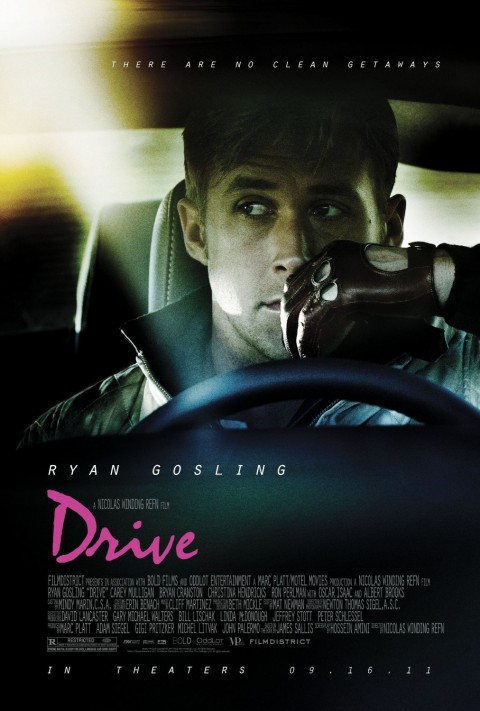
Man on Film: Drive
Holy fucking shit.
Really, those three words could aptly sum up my reaction upon walking out of the theater after seeing Drive. Remember a little while back when I credited TSLF with pointing out that you kind of trust Ryan Gosling at this point. Drive sets this in stone.
In Drive, Nicolas Winding Refn has crafted an action film that sits down and makes itself at home in the ordinary. Much of the first half of Drive does little more than follow Gosling's nameless Driver in his day-to-day life. He drives around Los Angeles, does a stunt on the set of a film, goes grocery shopping, and goes to work at the auto shop.
While Refn revels in the mundane, he sets these scenes against the sonic backdrop of Cliff Martinez's ethereal score and a smattering of synthed up electronic pop gems hearkening back to the 1980s. When combined with Driver's oft-out-of-time attire (namely his killer scorpion jacket) and the neon titles, the film manages to feel as if it is happening in a time unbound to a single era--both now and in the 80s--almost as if it were a dream.
It is in this dream- or trance-like state that the Driver seems to operate within. This is evident early on. After getting his wheel man spiel via voice-over, we see Gosling waiting curbside for two men pulling off a heist seen in part here:
Throughout the film, Gosling affects a calm that nearly spills over into aloofness. He is the modern Spartan. For the most part, he speaks in simple sentences and only when addressed. The one time he does speak at length, his wheel man spiel, comes via voice-over, so it is almost as if his only lengthy lines of dialogue come from the ether.
It is this tone that is struck in the majority of the opening half of the film that makes the violence that ensues in the second half of the film so jarring. The calm that pervades the film early on is broken suddenly and shockingly, and the random intermittence at which it explodes keeps the audience on edge. This is what sets Drive apart. Nicolas Winding Refn sets a tone to make the violence resonate. It can come at any time, and it goes just as fast as it came. And the driving scenes are unique in that Refn keeps the focus tight on the Driver, which causes a much more personal reaction to the sequences.
Now, the way that I've talked about the film makes it seem like acts of violence just break into an otherwise dreamlike movie about the mundane. There is a healthy dose of comedy and lightheartedness mixed in, just enough to sprinkle in a little levity.
As for the acting, Bryan Cranston, Ron Perlman, and Christina Hendricks are all perfectly fine. After what seems like at least a decade since Albert Brooks has had a role to do anything with, he gets his Robert Forster in Jackie Brown opportunity and relishes it with elan. As for Carey Mulligan, she plays an endearing quasi-single mother injecting a gentle humanity into the core of the film.
And then there's the star. As always, Ryan Gosling brings it. His performance is reminiscent of Brando or McQueen. He says next to nothing yet the camera is almost always focused on him. His scenes with Irene (Mulligan) and her son, Benicio (Kaden Leos), are great and he gets to show a slightly goofy side. When it comes time for him to unleash hell, he is up for the challenge.
All in all, what Refn has crafted is a stellar action piece that vacillates between a near-dreamlike state and storms of action and violence with unpredictability. It is also one of the best films of the year.
Really, those three words could aptly sum up my reaction upon walking out of the theater after seeing Drive. Remember a little while back when I credited TSLF with pointing out that you kind of trust Ryan Gosling at this point. Drive sets this in stone.
In Drive, Nicolas Winding Refn has crafted an action film that sits down and makes itself at home in the ordinary. Much of the first half of Drive does little more than follow Gosling's nameless Driver in his day-to-day life. He drives around Los Angeles, does a stunt on the set of a film, goes grocery shopping, and goes to work at the auto shop.
While Refn revels in the mundane, he sets these scenes against the sonic backdrop of Cliff Martinez's ethereal score and a smattering of synthed up electronic pop gems hearkening back to the 1980s. When combined with Driver's oft-out-of-time attire (namely his killer scorpion jacket) and the neon titles, the film manages to feel as if it is happening in a time unbound to a single era--both now and in the 80s--almost as if it were a dream.
It is in this dream- or trance-like state that the Driver seems to operate within. This is evident early on. After getting his wheel man spiel via voice-over, we see Gosling waiting curbside for two men pulling off a heist seen in part here:
Throughout the film, Gosling affects a calm that nearly spills over into aloofness. He is the modern Spartan. For the most part, he speaks in simple sentences and only when addressed. The one time he does speak at length, his wheel man spiel, comes via voice-over, so it is almost as if his only lengthy lines of dialogue come from the ether.
It is this tone that is struck in the majority of the opening half of the film that makes the violence that ensues in the second half of the film so jarring. The calm that pervades the film early on is broken suddenly and shockingly, and the random intermittence at which it explodes keeps the audience on edge. This is what sets Drive apart. Nicolas Winding Refn sets a tone to make the violence resonate. It can come at any time, and it goes just as fast as it came. And the driving scenes are unique in that Refn keeps the focus tight on the Driver, which causes a much more personal reaction to the sequences.
Now, the way that I've talked about the film makes it seem like acts of violence just break into an otherwise dreamlike movie about the mundane. There is a healthy dose of comedy and lightheartedness mixed in, just enough to sprinkle in a little levity.
As for the acting, Bryan Cranston, Ron Perlman, and Christina Hendricks are all perfectly fine. After what seems like at least a decade since Albert Brooks has had a role to do anything with, he gets his Robert Forster in Jackie Brown opportunity and relishes it with elan. As for Carey Mulligan, she plays an endearing quasi-single mother injecting a gentle humanity into the core of the film.
And then there's the star. As always, Ryan Gosling brings it. His performance is reminiscent of Brando or McQueen. He says next to nothing yet the camera is almost always focused on him. His scenes with Irene (Mulligan) and her son, Benicio (Kaden Leos), are great and he gets to show a slightly goofy side. When it comes time for him to unleash hell, he is up for the challenge.
All in all, what Refn has crafted is a stellar action piece that vacillates between a near-dreamlike state and storms of action and violence with unpredictability. It is also one of the best films of the year.
Subscribe to:
Posts (Atom)